
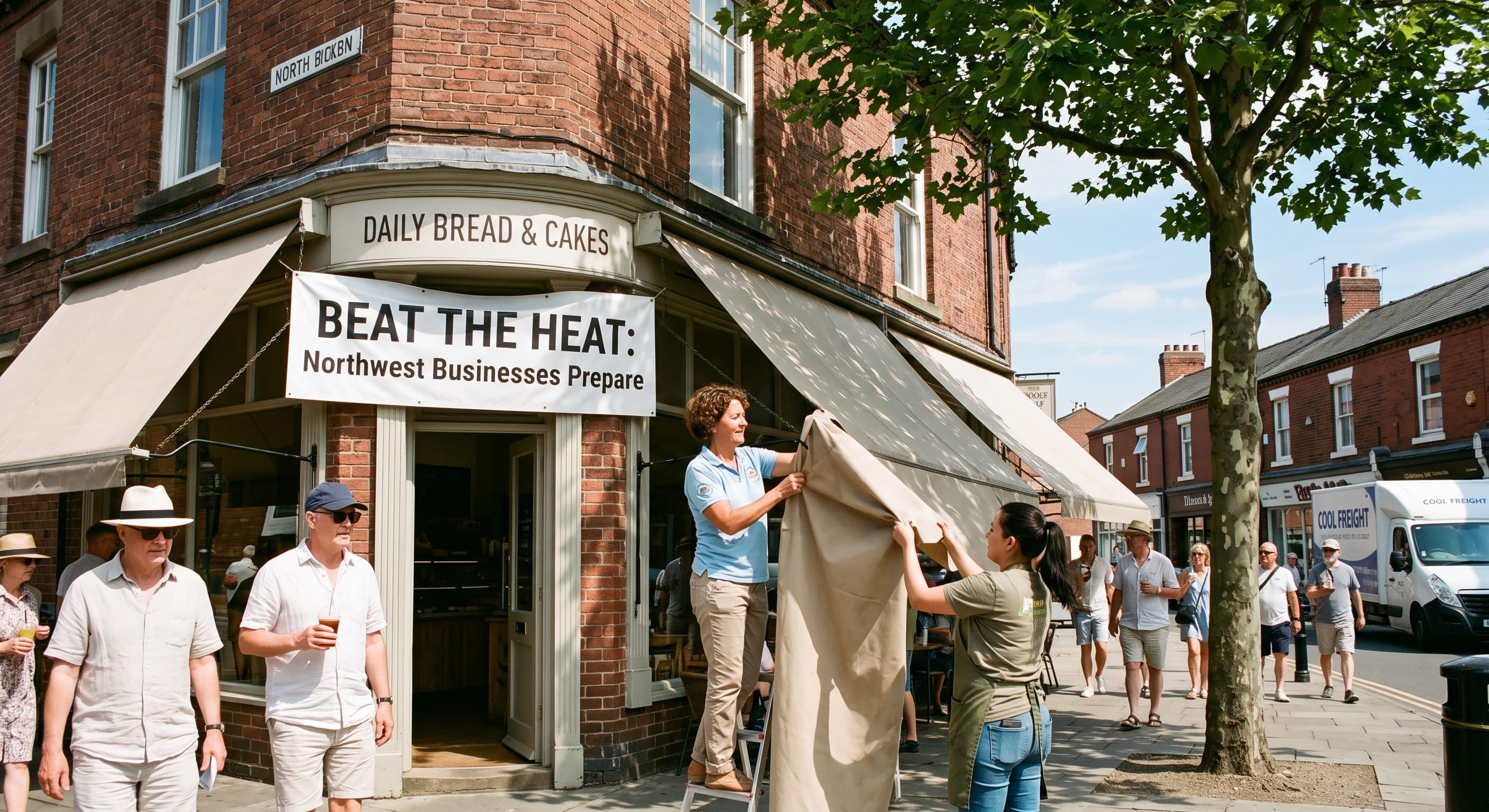
The North West of England, from the industrial centres of Greater Manchester and Merseyside to the manufacturing areas of Lancashire and Cheshire, has long been known for its damp maritime climate. However, summer heatwaves are quickly becoming more common, rather than rare exceptions.
When temperatures reach the mid-30s °C, the regional economy feels the impact immediately. Much of the UK’s commercial infrastructure was originally designed to retain heat, not release it. For business leaders across the region, extreme heat is no longer a short-term comfort issue; it is an operational, financial, and health-and-safety priority.
North West business leaders need practical measures to manage heatwaves now in offices and factories, as well as long-term strategies to prepare for the wider effects of climate change.
Office Environments: Maintaining Productivity Without Overheating
While office workers may not face the physical exertion of shop-floor employees, high ambient temperatures significantly impair cognitive function, concentration, and mood.
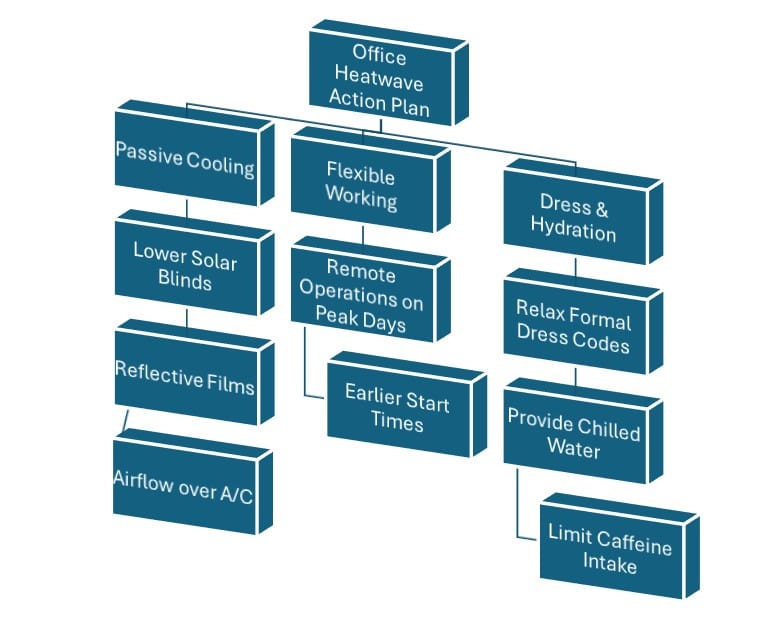
Actionable Coping Strategies for Offices:
- Prioritise Passive Cooling Before A/C: Lower blinds early in the morning before direct sunlight hits windows. Applying reflective solar film to glass facades can reduce heat gain by up to 70% without blocking natural light.
- Leverage Hybrid and Flexible Hours: Offer staff the option to start early (e.g., 7:00 AM to 3:00 PM) to avoid commuting during the hottest parts of the day. On extreme heat days, allowing staff to work remotely from home—if their home environment is cooler—can reduce transport stress.
- Relax Dress Codes: Swap formal corporate attire for breathable, natural fabrics like cotton and linen.
- Focus on Hydration and Nutrition: Provide chilled water dispensers throughout the office and actively encourage hydration. Remind staff that excessive caffeine can worsen dehydration.
- Manage Internal Heat Sources: Turn off unused equipment, servers, and non-essential lighting, all of which radiate surplus heat into small office spaces.
Factory Floors & Warehouses: Protecting Workers and Machinery
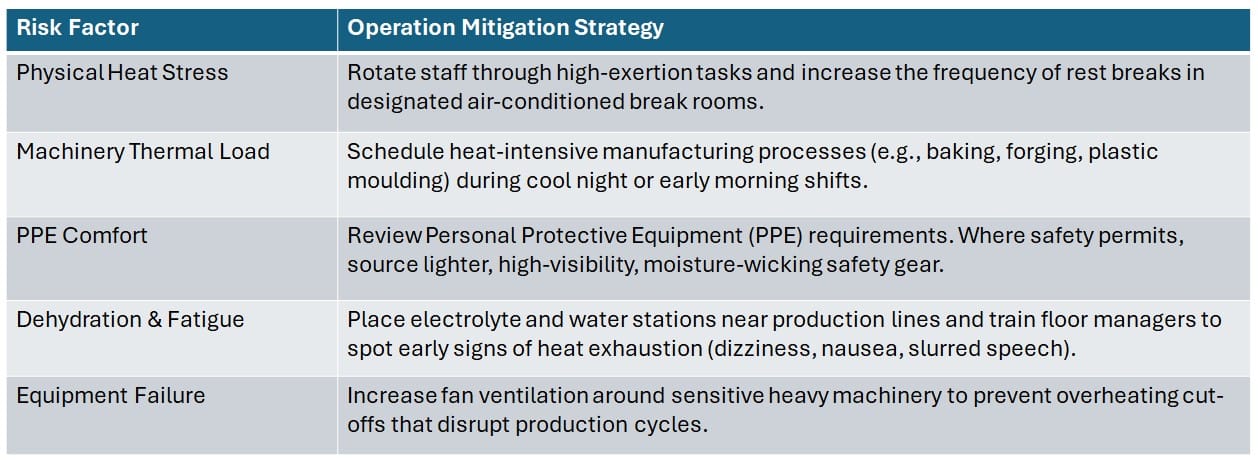
Managing high temperatures on factory floors presents a far tougher challenge. Industrial machinery radiates intense heat, physical labour raises core body temperatures, and high-ceilinged steel or brick industrial units can turn into thermal traps.
Legal Context: Under the Health and Safety at Work Act and Management Regulations, UK employers have a legal duty of care to maintain a “reasonable” working environment. While there is currently no legal maximum working temperature in the UK, the Health and Safety Executive (HSE) requires risk assessments for heat stress during high-temperature spells.
The Long-Term Impacts of Climate Change in the North West
Looking beyond immediate heatwaves, climate projections for North West England highlight a shift toward warmer, drier summers punctuated by intense, brief rainfall events, alongside milder, wetter winters.
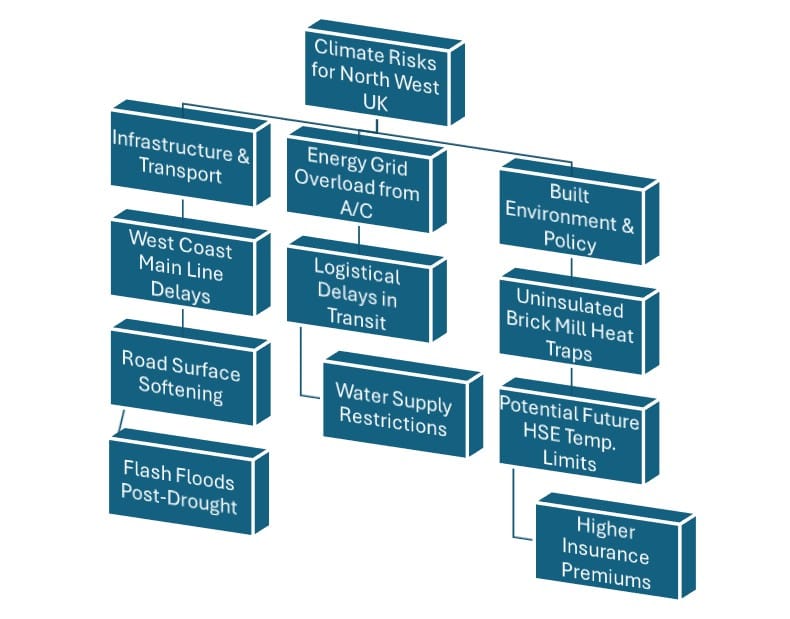
Key Long-Term Business Impacts:
- Transport & Infrastructure Vulnerabilities
The North West relies heavily on key transit corridors like the M6, M62, M56, and the West Coast Main Line. Extreme heat causes rail lines to buckle and road surfaces to soften, causing severe distribution delays for logistics and manufacturing hubs in Warrington, Trafford Park, and Liverpool Port.
- Energy Grid Strain and Cost Volatility
As more businesses retrofit air conditioning to cope with summer peaks, regional grid demand spikes. This increases operational electricity costs and elevates the risk of localised summer brownouts or power cuts when lines operate under reduced efficiency due to high ambient temperatures.
- “Drought-to-Deluge” Weather Patterns
Heatwaves in the North West are frequently followed by severe summer thunderstorms. Parched ground cannot absorb sudden downpours quickly, leading to heightened risks of flash flooding in low-lying industrial parks near rivers like the Mersey, Irwell, and Ribble.
- Retrofitting Legacy Buildings
Many North West industrial units are housed in converted 19th-century brick mills or single-skin corrugated metal warehouses. Neither type was designed for thermal comfort in high temperatures. Long-term business survival will require investing in passive architecture: roof insulation, green roofs, external shading, heat pumps with reversible cooling, and solar PV installations.
Summary Checklist for North West Business Leaders
- Audit Your Premises: Assess whether your office or factory acts as a heat trap during consecutive 30°C+ days.
- Update Heat Stress Risk Assessments: Ensure shop-floor workers have clear guidelines on hydration, rest cycles, and early sign recognition.
- Review Logistics Resilience: Plan buffer times into supply chains reliant on regional rail and motorway networks during heat alerts.
- Invest in Passive Adaptation: Prioritise solar shading, roof insulation, and ventilation upgrades alongside net-zero targets to build lasting operational resilience.
Featured News

24 March 2026